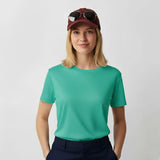
Open any clothing store today, and you’ll see the words “Suvin cotton” plastered across hangtags, product descriptions, and paid ads. Some of it is genuinely the jewel of Indian textiles. A lot of it, however, is ordinary cotton hiding behind an expensive label.
The real problem? You rarely notice the counterfeit on the rack. The truth usually reveals itself after the third or fourth laundry cycle—when the artificial silicone finish washes down the drain, leaving you with a stiff, scratchy shirt you overpaid for.
Here is what Suvin cotton actually is, how to inspect it before you buy, and how to protect yourself from clever marketing tricks.
What Is Suvin Cotton and Why Does It Cost So Much?
Suvin isn’t a weave, a thread count, or a chemical wash. It is a specific genetic variety of extra long staple cotton grown almost exclusively in Tamil Nadu, India. It was originally bred by agricultural scientists in Coimbatore who crossed an indigenous Indian variety (Sujata) with a legendary Egyptian sea-island variety (Vincent)—hence the name Suvin.
Three physical traits make genuine Suvin rare and expensive:
-
Staple length: While standard upland cotton fibers measure roughly an inch (around 24–27 mm), Suvin fibers consistently exceed 35 to 38 mm. Longer fibers mean fewer fiber ends exposed along the yarn, translating directly into incredible smoothness and tensile strength.
-
Extreme fineness (Micronaire): Suvin has one of the lowest micronaire values among all commercial cottons. The fibers are extraordinarily slim, which gives the finished Suvin cotton fabric its cool, fluid drape and natural, silk-like luster.
-
Hand-harvesting: Industrial mechanical pickers tear and fracture delicate long fibers. Real Suvin is harvested by hand in multiple passes, selecting only mature bolls to keep the fibers intact and free of trash.
Because it demands specific soil, intense manual labor, and specialized slow-speed spinning mills, Suvin accounts for a fraction of a percent of global cotton output. If someone is offering you a brand-new Suvin cotton T-shirt for the price of a standard gym tee, you are looking at conventional cotton.
How to Spot Real Suvin: Four Practical Tests
While lab testing under a microscope is the only foolproof verification, these hands-on checks will help weed out the obvious fakes:
-
The touch and post-wash test: Run the fabric between your thumb and forefinger. Suvin feels naturally cool, dense, and fluid—never dry, starchy, or plasticky. Beware the "showroom slickness": fast-fashion mills coat cheap fibers with heavy silicone softeners. True softness lives inside the fiber wall. If a shirt feels heavenly on day one but feels like sandpaper after one gentle wash, it was an artificial finish.
-
The light and surface check: Hold the fabric up against a window or bright light. Real Suvin cotton fabric shows a dense, even weave with a soft, subtle sheen rather than a dull, matte surface. Look sideways along the edge of the cloth: standard cotton shows a visible "halo" of fuzzy fiber ends poking out, whereas high-grade long staple cotton has a clean, smooth surface profile.
-
The friction (pilling) test: Firmly rub a small patch of fabric against itself with your thumb 15 to 20 times. Cheap short-staple cotton will immediately release short, broken fibers that tangle into little fuzzy pills. Extra long staple cotton stays intact.
-
The recovery test: Give the fabric near the hem or collar a firm, gentle tug and release it. Long fibers handle tension naturally and snap back into shape without leaving ripples or warped seams.
The Paperwork Test: Suvin vs. Supima
Here is the candid reality: high-grade Egyptian Giza cotton, American Supima, and Suvin can feel very close to each other in hand. The ultimate filter is always traceability.
Ask the brand where their raw yarn was sourced. Dedicated manufacturers know exactly which spinning mills in Southern India handle their fiber. Watch out for vague language like "crafted from luxury imported blends" or "Suvin-rich." When a tag says "Suvin blend" without disclosing an exact percentage, it often contains less than 5% actual Suvin to legally claim the name.
Suvin vs. Supima: Which should you choose? Both represent the pinnacle of extra long staple cotton:
-
Supima: Grown in the US Southwest, Supima fibers are exceptionally durable, slightly crisper, and build structured, resilient garments that hold their shape through years of hard wear.
-
Suvin: Noticeably finer and silkier. It drapes closer to the skin, breathes exceptionally well in warm humidity, and has a gentle natural luster that looks closer to silk than rugged cotton.
Whether you are shopping for a casual Suvin tshirt, tailored Suvin cotton shirts for the office, or breathable Suvin cotton sheets for your bed, always look for 100% purity markers. To preserve the fiber, wash in cool water on a gentle cycle, skip heavy chemical softeners, and never use chlorine bleach.
Quality and Transparency at Noo-Brand
At Noo-Brand, we eliminate the guesswork. We work exclusively with three certified cottons: Suvin, Supima, and Certified Organic. You will never find mystery blends, synthetic fillers, or misleading hangtags in our lineup.
Whether you choose our Suvin polo for its silky drape or our Supima polo for its crisp structure, every single garment is backed by our 365-day replacement guarantee against manufacturing defects. If the fabric or construction fails to live up to our standards within a year, we replace it.
Frequently Asked Questions
What does the name Suvin mean?
The name reflects its scientific heritage. It was created by cross-breeding Sujata (an Indian cotton variety) with St. Vincent (an Egyptian Sea Island variety) at the Tamil Nadu Agricultural University.
Why is Suvin so much more expensive than regular cotton?
It requires delicate hand-picking, grows in limited microclimates, yields fewer bales per acre, and requires specialized low-speed spinning mills so the fine fibers don't break.
Can I wear Suvin shirts every day?
Yes. Despite its delicate, silky hand-feel, extra long staple cotton is inherently stronger than conventional cotton. With gentle machine washing and line drying, a well-made Suvin garment will outlast standard cotton tees by years.
The Bottom Line
Authentic Suvin cotton is one of the softest, most breathable natural fibers on earth, but its rarity makes it a prime target for deceptive labeling. Never rely on marketing buzzwords alone. Check the fabric's recovery, watch how it behaves after the first wash, and buy from brands that are transparent about their sourcing and willing to guarantee the durability of their fibers.